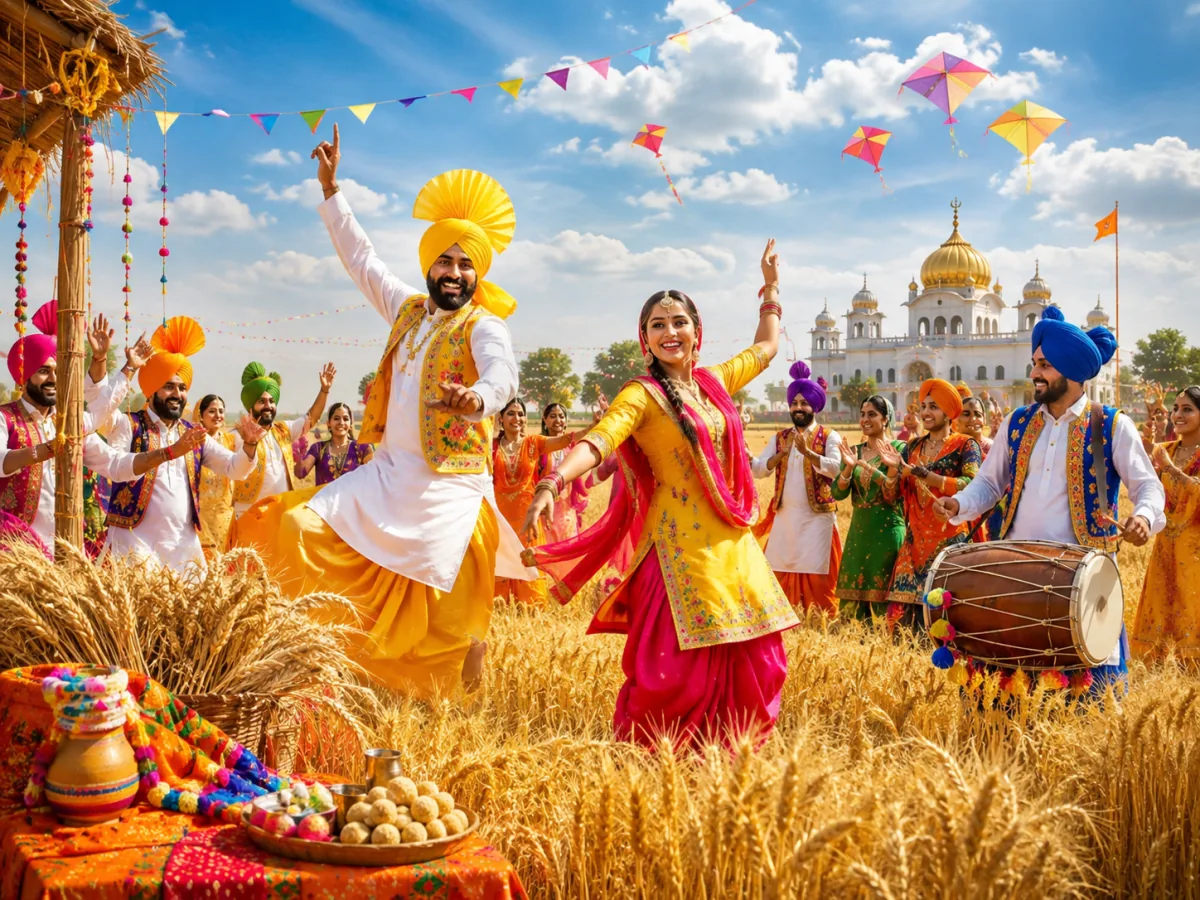
About Baisakhi
Falls on the first day of the Vaisakha month. For Sikhs, commemorates the founding of the Khalsa by Guru Gobind Singh in 1699. For Hindus, marks the solar new year.
Significance
Baisakhi marks both a solar new year celebrated broadly across North India and, for Sikhs specifically, the founding of the Khalsa — the collective body of initiated Sikhs.
History & story
On this day in 1699, Guru Gobind Singh initiated the first five Sikhs (the Panj Pyare) into the Khalsa order at Anandpur Sahib, establishing a new form of collective Sikh identity and discipline.
Muhurat (2027)
Morning bath and prayer; gurdwara visit.
Rituals & observances
- ◆Gurdwara visits
- ◆Nagar Kirtan
- ◆Bhangra and Gidda
- ◆Spring harvest celebrations
Regional variations
Punjab and Haryana primary.
Baisakhi — every year
The date shifts each year on the Gregorian calendar because it follows the Hindu lunar-solar cycle.
Frequently asked questions
What is the Khalsa?
+
The order of initiated Sikhs founded by Guru Gobind Singh, bound by a common code of conduct and the Five Ks (articles of faith).
Why is Baisakhi also a harvest festival?
+
It coincides with the ripening of the rabi (winter) crop in Punjab, making it a natural occasion for both religious observance and harvest celebration.
Is Baisakhi celebrated only by Sikhs?
+
No — Hindus across North India also mark it as a solar new year (Vaisakhi), with regional harvest customs of their own.