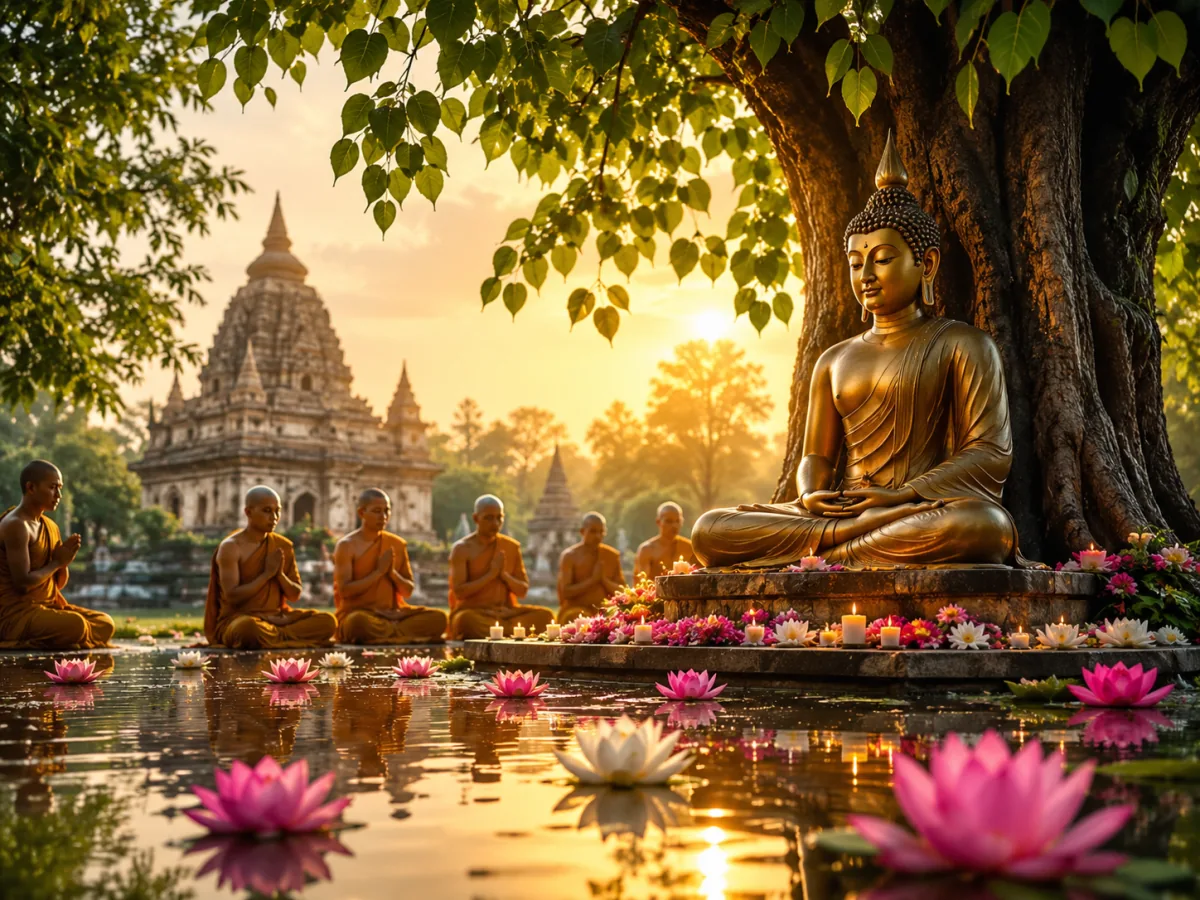
About Buddha Purnima
Buddha Purnima commemorates three pivotal events in the life of Siddhartha Gautama, believed to have occurred on the same Vaishakh full-moon day: his birth in Lumbini, his enlightenment under the Bodhi tree in Bodh Gaya, and his parinirvana (passing) in Kushinagar.
Significance
The day distills the Buddha's entire teaching — impermanence, compassion, and the path to liberation from suffering — into a single unified observance of his birth, awakening, and death.
History & story
The convergence of birth, enlightenment, and death on one calendar day is a matter of traditional belief rather than historical record, but it has made Buddha Purnima the most universally observed date across Buddhist traditions worldwide.
Rituals & observances
- ◆Temple visits and meditation
- ◆Offering of flowers, incense and lamps at Bodhi trees
- ◆Recitation of Buddhist scriptures
- ◆Almsgiving to monks and the needy
- ◆Release of caged birds as an act of compassion
Regional variations
Major observances at Bodh Gaya (Bihar), Sarnath, and Kushinagar in India, and across Buddhist-majority nations including Sri Lanka, Thailand, Myanmar, and Nepal, where it is known as Vesak.
Buddha Purnima — every year
The date shifts each year on the Gregorian calendar because it follows the Hindu lunar-solar cycle.