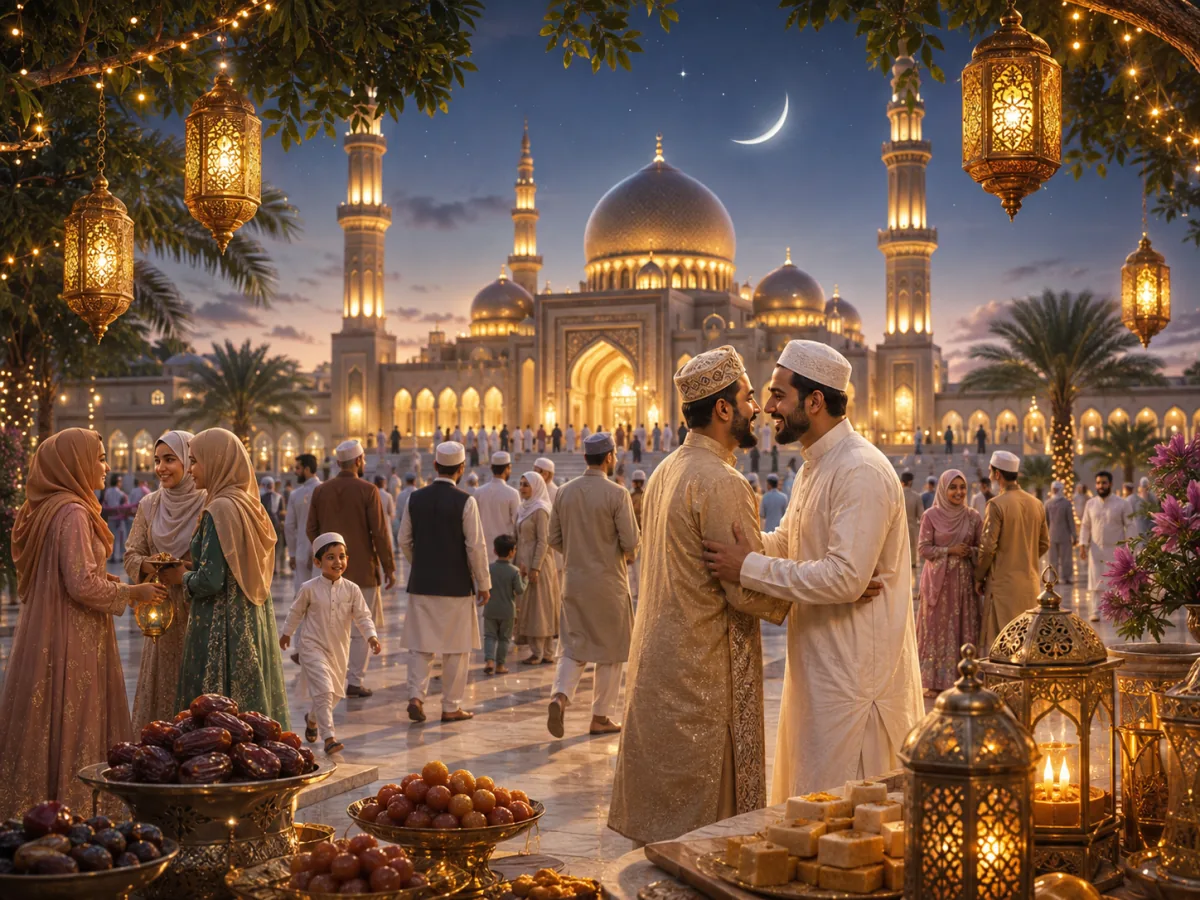
About Eid al-Fitr
Marks the end of Ramadan, the month-long dawn-to-sunset fast. Begins with Eid prayers in the morning and feasting through the day.
Significance
Eid al-Fitr celebrates the successful completion of a month of fasting, self-discipline, and spiritual reflection during Ramadan.
History & story
The festival was instituted by Prophet Muhammad after the Hijra to Medina, marking the end of the obligatory fast (sawm) that is one of the Five Pillars of Islam.
Muhurat (2027)
Eid is decided by moon sighting on the 29th of Ramadan.
Rituals & observances
- ◆Eid prayers
- ◆Zakat al-Fitr (charity)
- ◆Family gathering
- ◆Feast
- ◆Eid greetings (Eid Mubarak)
Regional variations
Pan-Islamic worldwide. India sees major celebrations in Delhi (Jama Masjid), Lucknow, Hyderabad.
Eid al-Fitr — every year
The date shifts each year on the Gregorian calendar because it follows the Hindu lunar-solar cycle.
Frequently asked questions
Why is the Eid al-Fitr date uncertain until close to the day?
+
Because the Islamic calendar is lunar and the start of the new month traditionally depends on the physical sighting of the crescent moon, which can vary by region.
What is Zakat al-Fitr?
+
A mandatory charitable donation, usually food or its cash equivalent, given before Eid prayers so that less fortunate members of the community can also celebrate.
How is Eid al-Fitr different from Eid al-Adha?
+
Eid al-Fitr ends the Ramadan fast; Eid al-Adha, roughly two months later, commemorates Ibrahim's willingness to sacrifice his son and coincides with the Hajj pilgrimage.