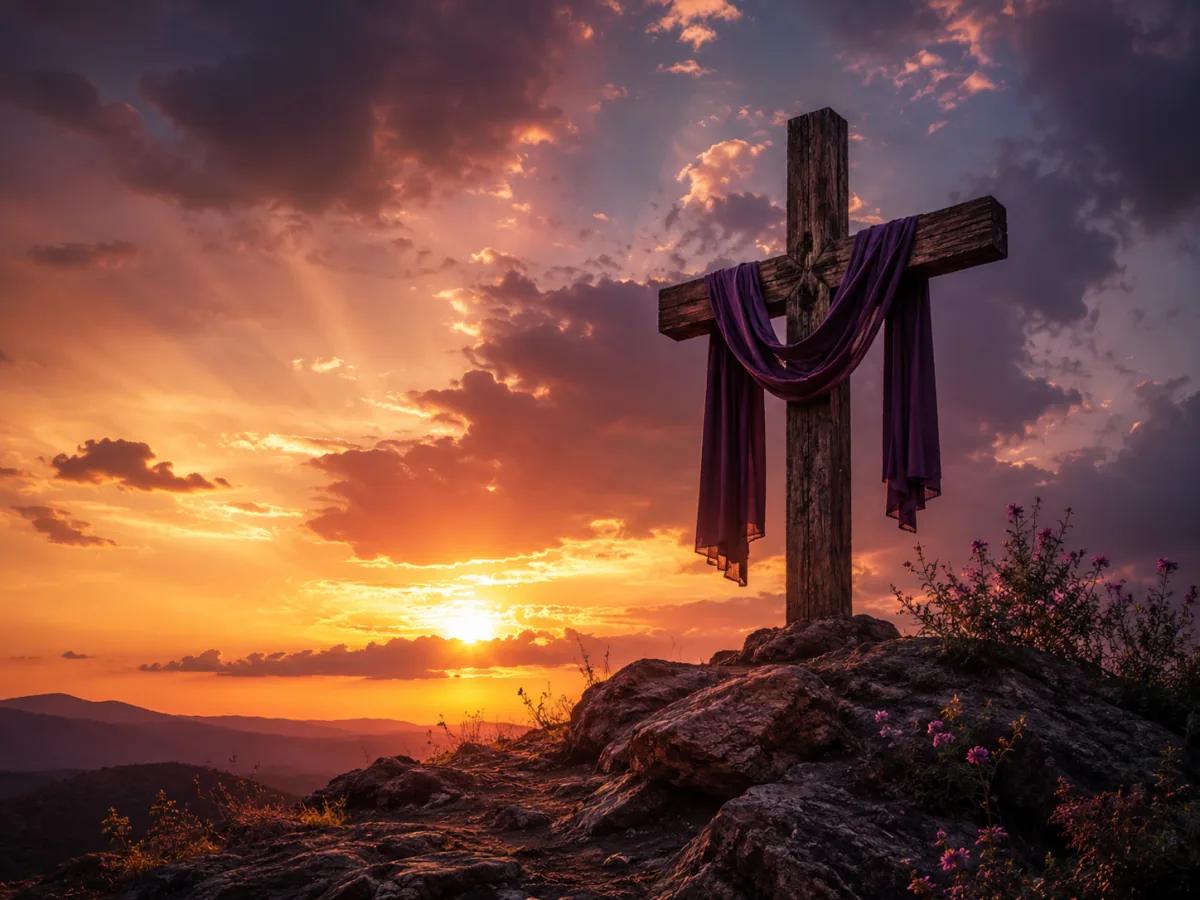
About Good Friday
Friday before Easter Sunday. Commemorates the crucifixion of Jesus. Observed with solemnity, fasting, and church services.
Significance
Good Friday is the most solemn day in the Christian liturgical calendar, commemorating Jesus Christ's crucifixion and death as an act of atonement.
History & story
The observance dates to the earliest centuries of Christianity, rooted in the Gospel accounts of the Passion of Christ, and is marked by fasting, penance, and reflection rather than celebration.
Rituals & observances
- ◆Stations of the Cross
- ◆Fasting
- ◆Church services
- ◆Veneration of the Cross
Regional variations
Worldwide. In India, Kerala and Goa observe widely.
Good Friday — every year
The date shifts each year on the Gregorian calendar because it follows the Hindu lunar-solar cycle.
Frequently asked questions
Why is it called "Good" Friday if it commemorates a death?
+
The name likely derives from an older sense of "good" meaning holy or pious, reflecting the day's redemptive significance in Christian theology rather than a literal description.
What are the Stations of the Cross?
+
A devotional walk through fourteen depictions of Christ's final hours, from his condemnation to his burial, observed in churches on Good Friday.
Does the date change every year?
+
Yes — Good Friday is always the Friday before Easter Sunday, and Easter's date is calculated from the lunar calendar, so both shift each year.