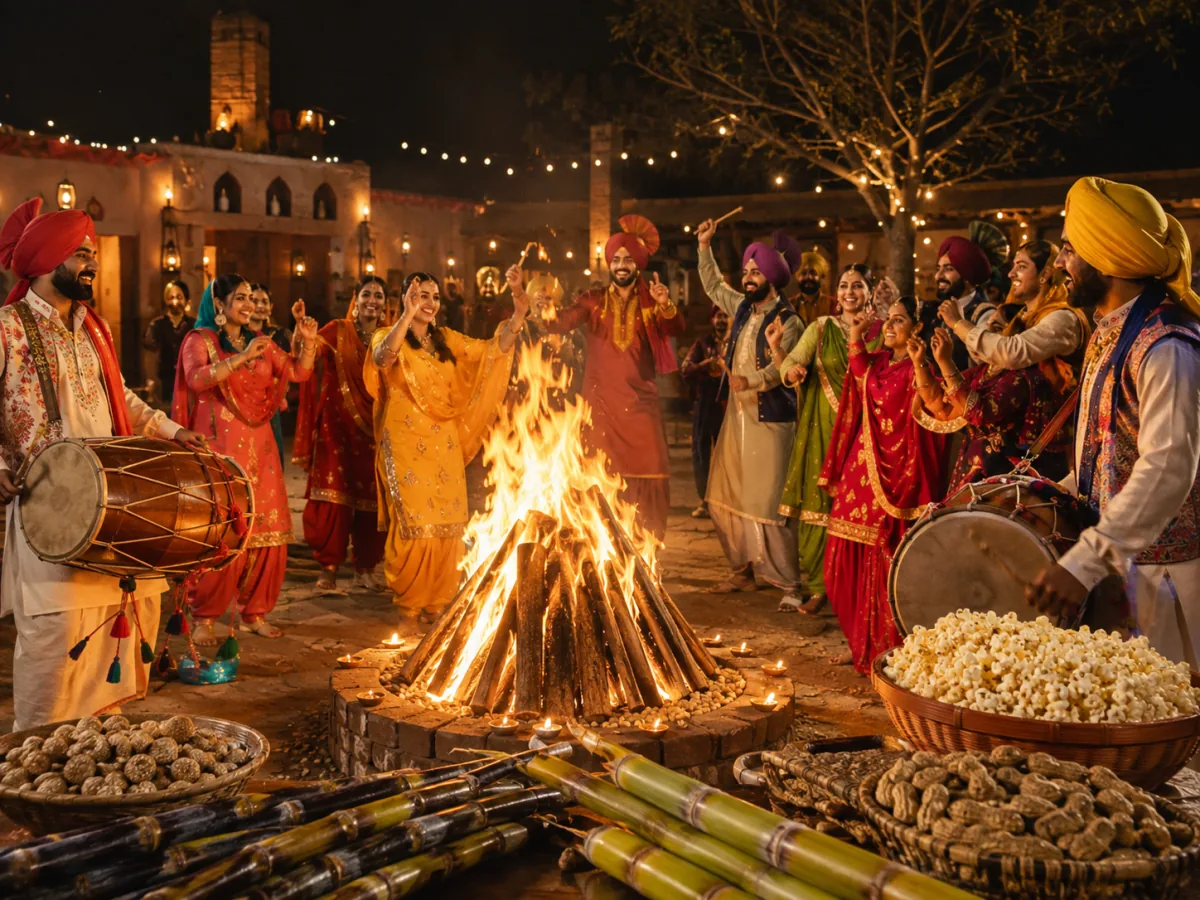
About Lohri
Lohri, observed on the night before Makar Sankranti, is a Punjabi folk festival marking the winter solstice's passing and the harvest of sugarcane, sesame and wheat. Communities gather around a bonfire, throw sesame seeds, popcorn, and til-rewri into the flames, and sing and dance to traditional dhol beats.
Significance
As a solar, not lunar, observance tied to the winter solstice and harvest cycle, Lohri falls on virtually the same Gregorian date every year, anchoring the start of the North Indian festival season that continues into Makar Sankranti the next day.
History & story
The most popular Lohri folk song commemorates Dulla Bhatti, a Punjabi folk hero from the Mughal era said to have rescued girls who were being sold into slavery and arranged their marriages, giving them dowries from wealth he took from the rich.
Rituals & observances
- ◆Lighting a community bonfire
- ◆Offering til (sesame), gajak and popcorn to the fire
- ◆Bhangra and Gidda dance
- ◆Singing traditional Lohri folk songs
- ◆Celebrating a family's first Lohri after a birth or marriage
Regional variations
Predominantly Punjab, Haryana, and Himachal Pradesh, and celebrated widely by the Punjabi diaspora in Delhi, the UK, Canada, and beyond.
Lohri — every year
The date shifts each year on the Gregorian calendar because it follows the Hindu lunar-solar cycle.