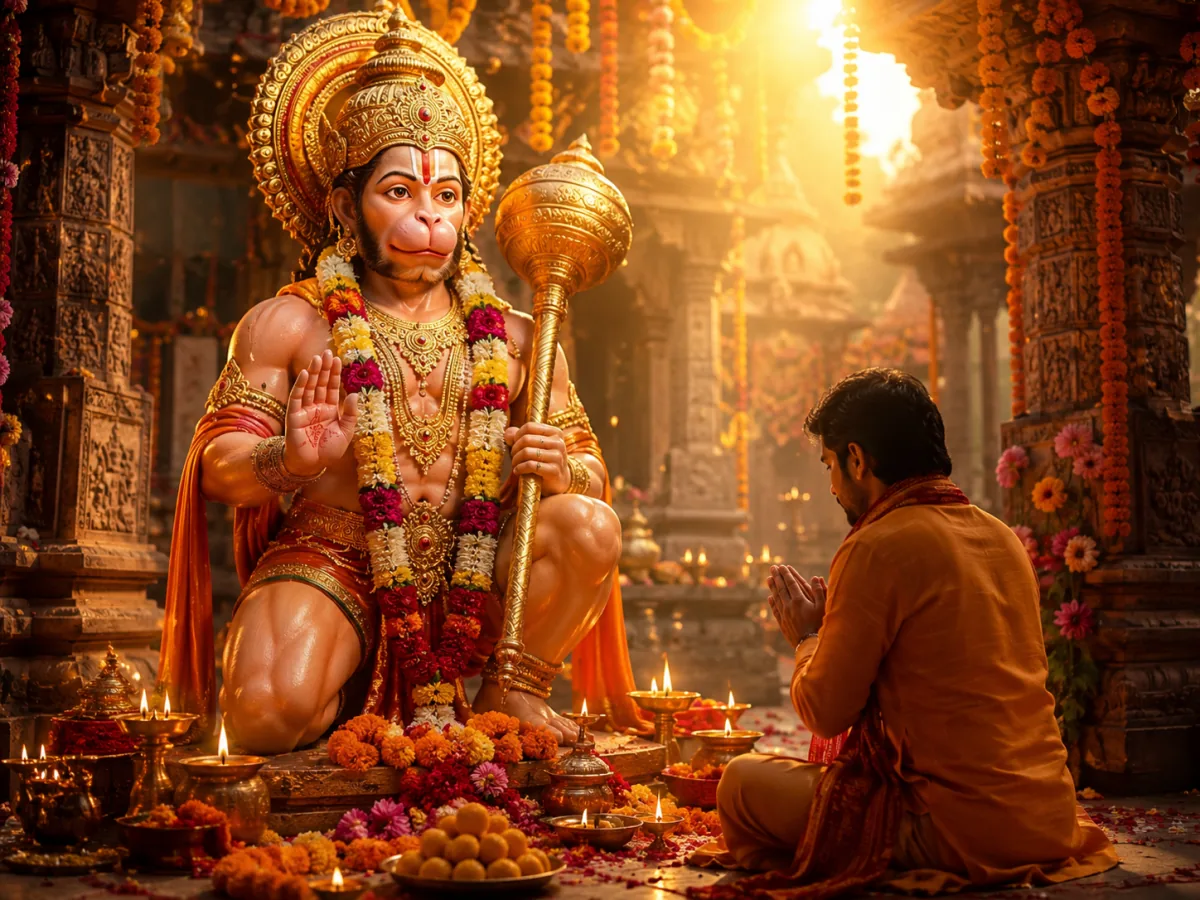
About Hanuman Jayanti
Hanuman Jayanti, observed by most North Indian traditions on Chaitra Purnima, celebrates the birth of Hanuman, son of Anjana and the wind god Vayu, whose unwavering devotion to Rama makes him the archetypal ideal of bhakti (devotional surrender) in Hindu tradition.
Significance
Hanuman represents the ideal devotee — strength, humility, and total surrender to a higher purpose — making Hanuman Jayanti a day devotees seek courage and protection from obstacles.
History & story
Hanuman's exploits — leaping to Lanka, carrying the Sanjeevani mountain to save Lakshmana, and burning Lanka with his tail — are central episodes of the Ramayana retold and reenacted around this day.
Muhurat (2025)
Sunrise puja is preferred, as Hanuman is traditionally believed to have been born at dawn; many devotees also observe an all-day fast.
Rituals & observances
- ◆Sunrise puja
- ◆Hanuman Chalisa recitation
- ◆Sindoor (vermilion) offering to the idol
- ◆Reading the Sundara Kanda of the Ramayana
- ◆Temple processions
Regional variations
Celebrated pan-India with particular intensity at Hanuman temples; some southern and eastern traditions observe Hanuman Jayanti on a different date tied to the Margashirsha month rather than Chaitra Purnima.
Hanuman Jayanti — every year
The date shifts each year on the Gregorian calendar because it follows the Hindu lunar-solar cycle.