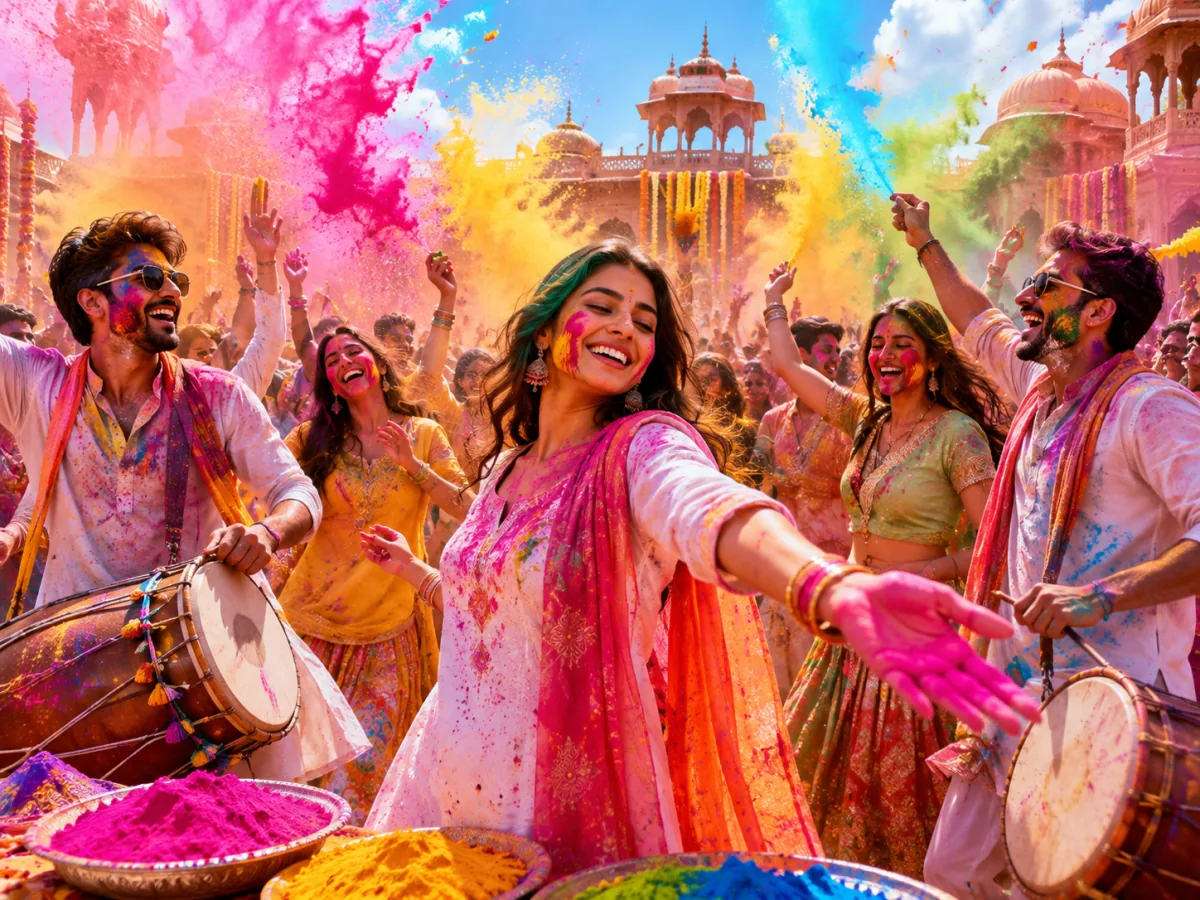
About Holi
Holi celebrates the burning of Holika and the protection of Prahlada by Vishnu. Falls on Phalguna purnima (full moon of Phalguna month). The night before is Holika Dahan (bonfire); the day of Holi is the play of colored powders.
Significance
Holi celebrates the arrival of spring, new harvests, and the fertility of the land — and the moral victory of devotion over tyranny embodied in the Holika-Prahlada legend.
History & story
The festival takes its name from Holika, sister of the demon king Hiranyakashipu, who tried to kill his son Prahlada — a devotee of Vishnu — by carrying him into a fire while wearing a fire-proof cloak. Prahlada survived through his devotion; Holika burned. Holika Dahan bonfires re-enact this every year.
Muhurat (2026)
Holika Dahan muhurat depends on bhadra kaal absence — typically a 2-3 hour window after sunset on Phalguna purnima.
Rituals & observances
- ◆Holika Dahan bonfire
- ◆Color play (rangwali)
- ◆Bhang preparation
- ◆Visiting friends and family
Regional variations
Mathura/Vrindavan host the most famous celebrations. Bengal observes as Dol Jatra. South India observes more quietly.
Holi — every year
The date shifts each year on the Gregorian calendar because it follows the Hindu lunar-solar cycle.