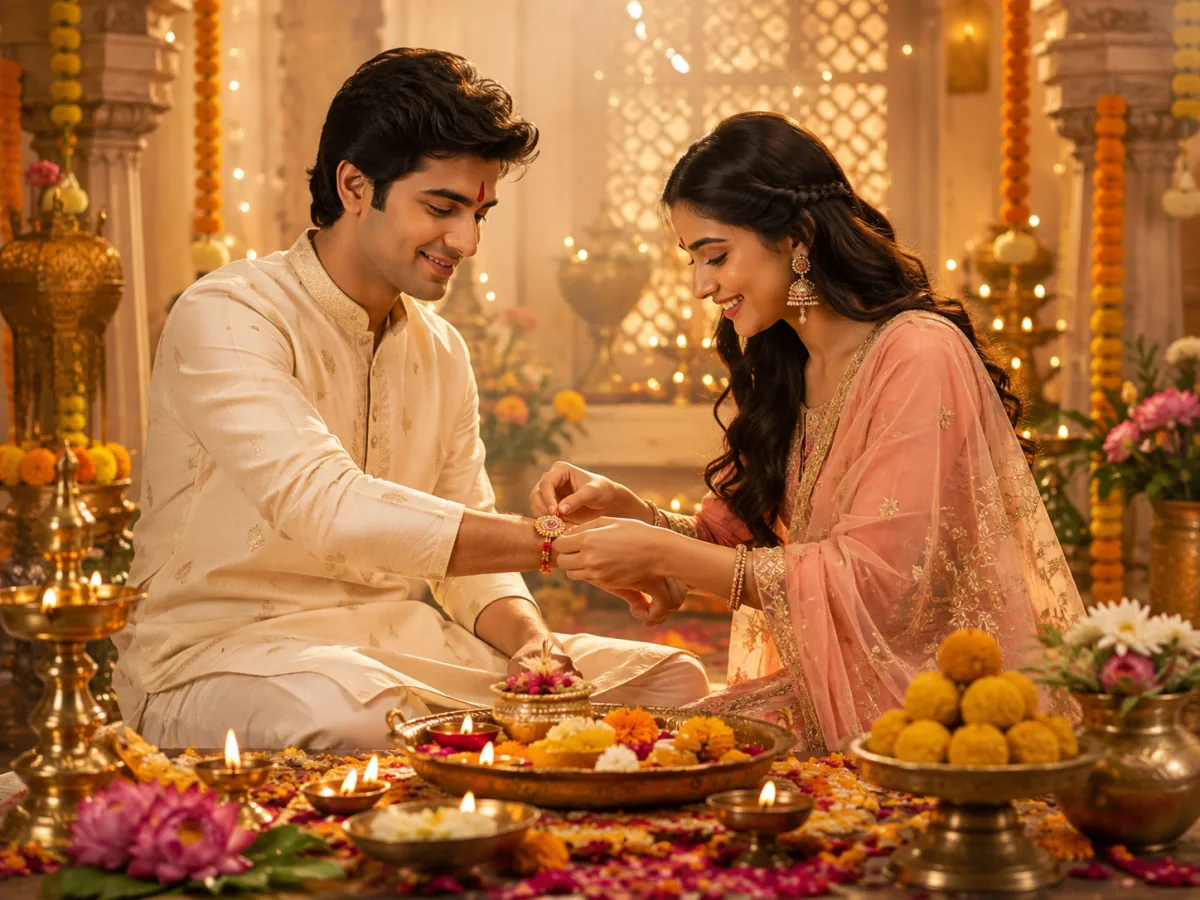
About Raksha Bandhan
Sisters tie a sacred thread (rakhi) around their brother's wrist invoking his protection; brothers offer gifts and pledge protection. Falls on Shravan purnima (full moon of Shravan month).
Significance
Raksha Bandhan celebrates the protective bond between brothers and sisters, extending by custom to any relationship of trust and care, not only blood siblings.
History & story
The rakhi thread's protective symbolism is linked to several legends, including Indra's wife Sachi tying a protective thread on him before his battle with demons, and the Rajput queen Karnavati sending a rakhi to Emperor Humayun requesting his protection.
Muhurat (2026)
Rakhi must be tied during the muhurat that avoids bhadra kaal — typically afternoon on Shravan purnima.
Rituals & observances
- ◆Tying rakhi
- ◆Sweets exchange
- ◆Gifts to sisters
- ◆Aarti and tilak
Regional variations
Pan-Indian. Specifically prominent in North and West India.
Raksha Bandhan — every year
The date shifts each year on the Gregorian calendar because it follows the Hindu lunar-solar cycle.