About Nag Panchami
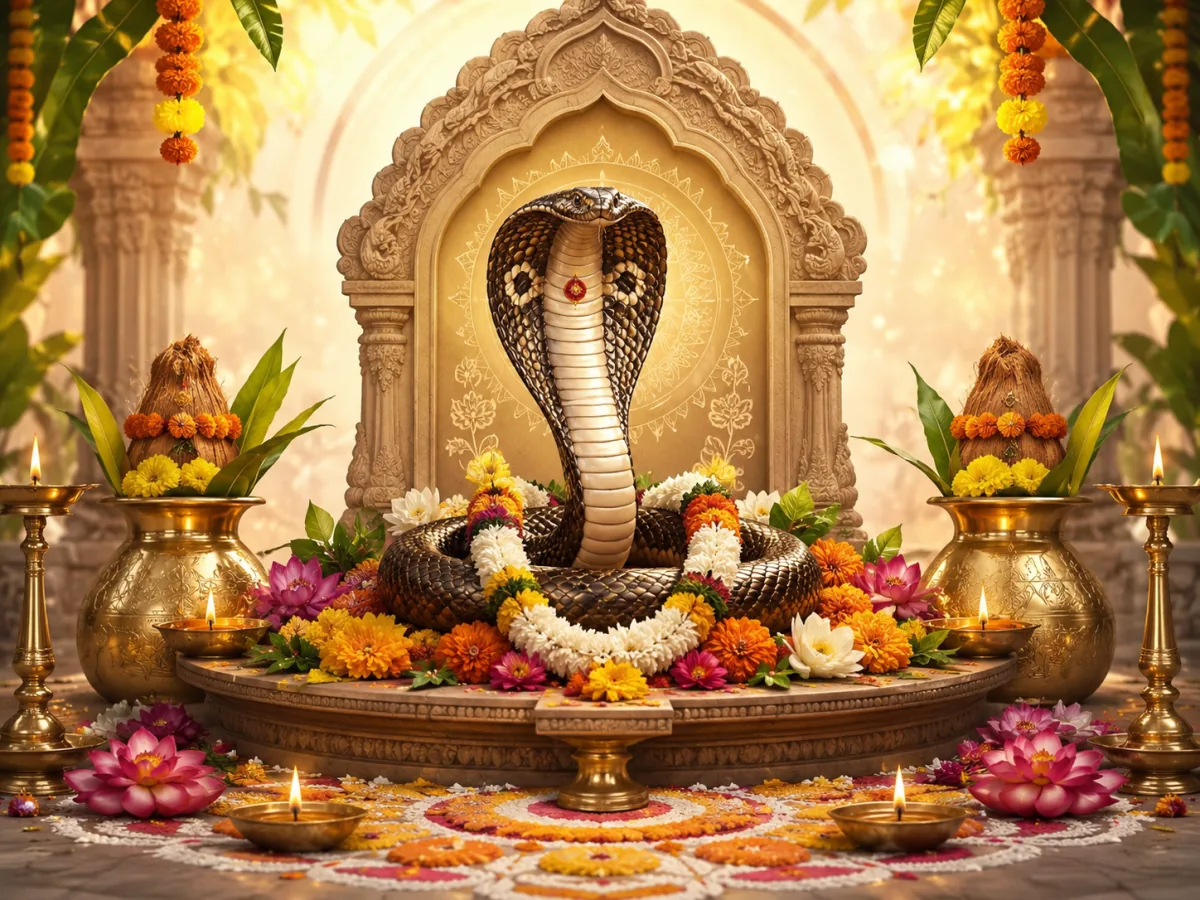
Nag Panchami falls on Shravan Shukla Panchami and is dedicated to the worship of Nagas — serpent deities revered across Hindu, Jain, and Buddhist tradition. Devotees offer milk, flowers and turmeric to snake idols or images, seeking protection from snakebite and blessings for family prosperity.
Significance
Nagas hold a distinctive place in Hindu cosmology, linked to fertility, the underworld (Patala), and to major deities — Shiva wears a serpent, and Vishnu reclines on the cosmic serpent Shesha — making their worship a bridge between agrarian respect for snakes and reverence for the forces they represent.
History & story
Puranic legends recount the story of Krishna subduing the venomous serpent Kaliya in the Yamuna river, an episode closely associated with Nag Panchami observance and iconography.
Muhurat (2027)
Morning puja hours on Panchami tithi are preferred.
Rituals & observances
- ◆Offering milk to snake idols/images
- ◆Drawing snake images at the doorway with turmeric or cow dung
- ◆Fasting
- ◆Visiting Naga temples
- ◆Avoiding digging or ploughing the earth
Regional variations
Especially significant in Maharashtra, Karnataka, and Rajasthan; in Gujarat, the equivalent observance follows the Gujarati calendar and can fall roughly a lunar fortnight later.
Nag Panchami — every year
The date shifts each year on the Gregorian calendar because it follows the Hindu lunar-solar cycle.