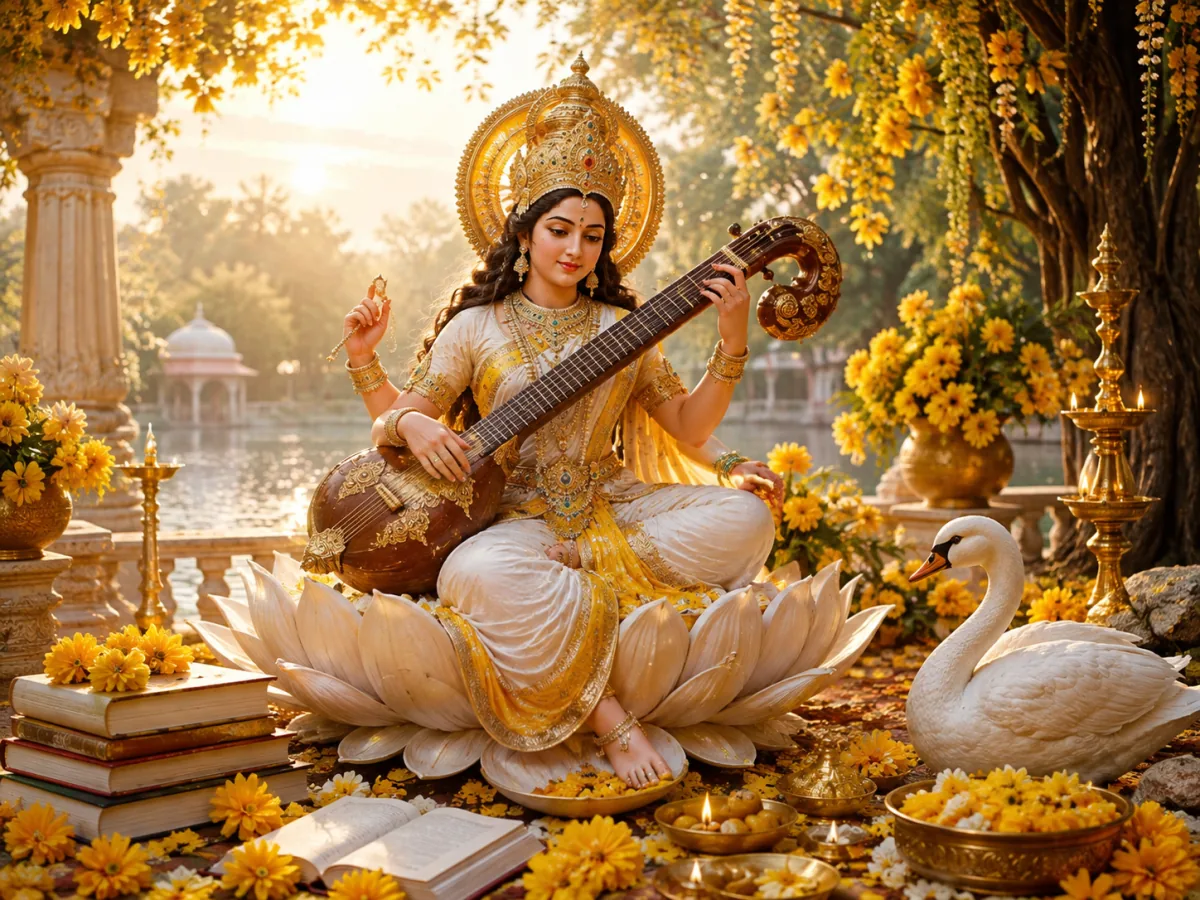
About Vasant Panchami
Vasant Panchami falls on Magha Shukla Panchami and marks the official start of spring in the Hindu calendar. The day is dedicated to Saraswati, and is considered especially auspicious for children beginning formal education, students before exams, and artists and musicians seeking her blessing.
Significance
Yellow — the color of mustard fields in bloom and of ripening grain — dominates the day's clothing, food, and decoration, tying the festival to both the goddess of learning and the literal arrival of spring.
History & story
Saraswati is described in the Rigveda as both a river goddess and, over time, as the goddess of speech, learning, and the arts, and Vasant Panchami's association with her worship dates back over a millennium in Bengal and North India.
Muhurat (2025)
Morning hours are preferred for Saraswati puja and for Vidyarambh (a child's first formal lesson, often writing their first letters in rice or sand).
Rituals & observances
- ◆Saraswati puja in schools and homes
- ◆Wearing yellow clothing
- ◆Vidyarambh (child's first writing lesson)
- ◆Offering yellow sweets and flowers
- ◆Flying kites (in parts of North India)
Regional variations
West Bengal holds elaborate Saraswati Puja pandals akin to a smaller Durga Puja; Punjab associates the day with kite-flying and the folk hero Dulla Bhatti; it is also observed in Sikh gurdwaras as Basant Panchami.
Vasant Panchami — every year
The date shifts each year on the Gregorian calendar because it follows the Hindu lunar-solar cycle.