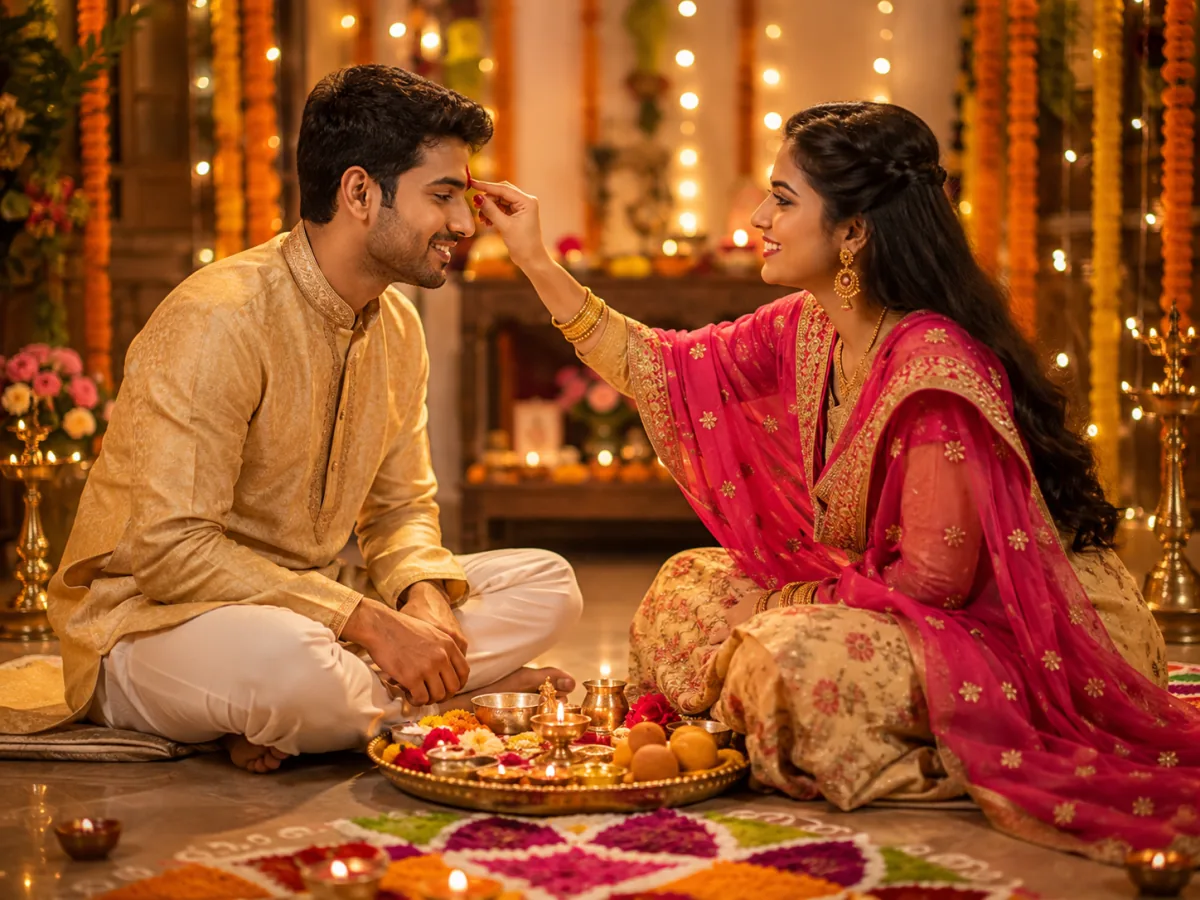
About Bhai Dooj
Bhai Dooj falls on Kartik Shukla Dwitiya, two days after Diwali, and closes the five-day festival cycle. Sisters apply a tilak on their brothers' foreheads, perform an aarti, and pray for their long life and well-being; brothers in turn offer gifts and pledge protection — a custom paralleling Raksha Bandhan but observed at the opposite end of the year in most regions.
Significance
The legend behind the day — Yama, god of death, visiting his sister Yamuna and being welcomed with a tilak and feast — frames the sibling bond as powerful enough to be honored even by death itself.
History & story
The founding story holds that Yamuna's warm welcome pleased Yama so much that he declared any brother who receives a tilak from his sister on this day would be protected from untimely death, cementing the ritual's protective symbolism.
Muhurat (2026)
Aparahna kaal (early afternoon) on Dwitiya tithi is considered the most auspicious window for the tilak ceremony.
Rituals & observances
- ◆Tilak ceremony
- ◆Aarti for the brother
- ◆Sharing sweets at the sister's home
- ◆Gift exchange
- ◆Family feast
Regional variations
Known as Bhau Beej in Maharashtra and Goa, Bhai Tika in Nepal (a major festival with an elaborate seven-colored tilak), and Yama Dwitiya in parts of North India.
Bhai Dooj — every year
The date shifts each year on the Gregorian calendar because it follows the Hindu lunar-solar cycle.