About Chhath Puja
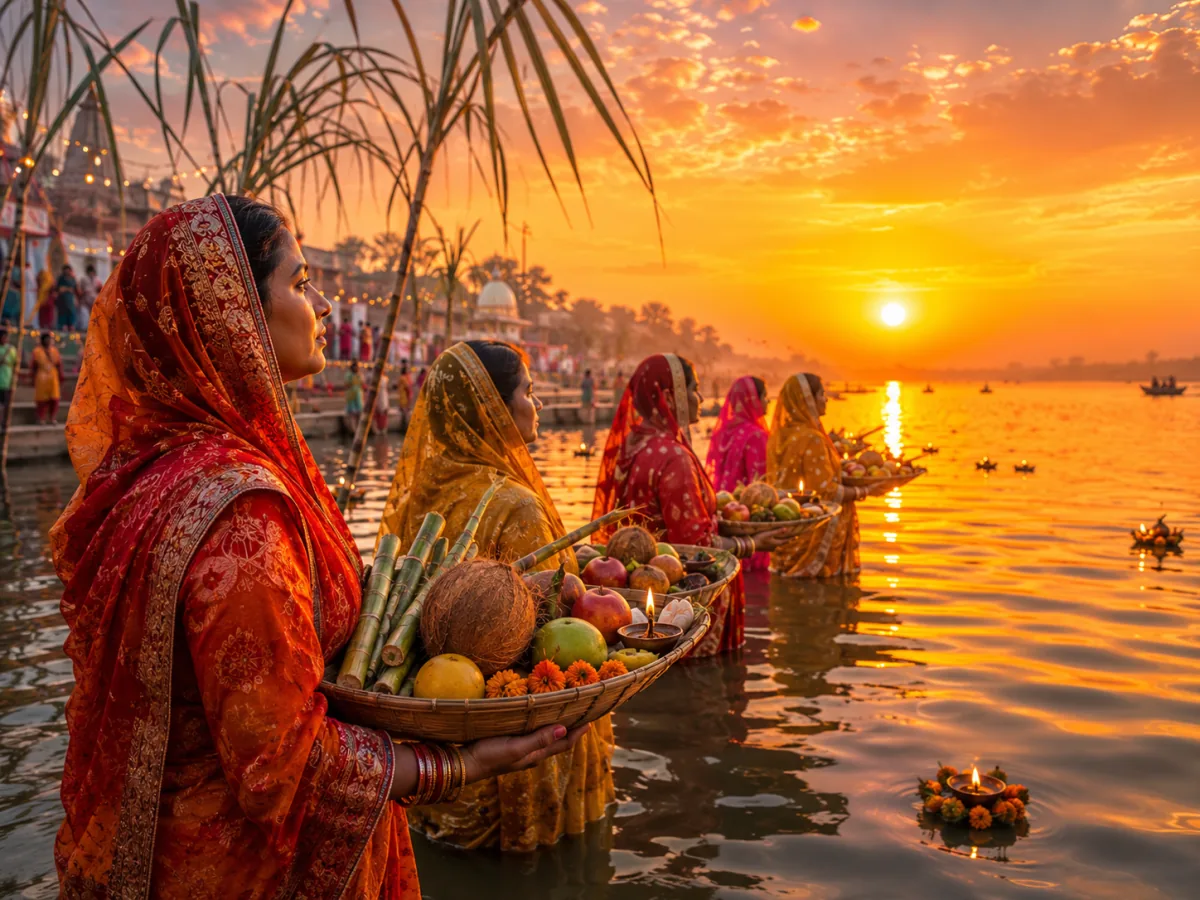
Chhath Puja is one of the most physically demanding Hindu observances, spanning four days from Nahay Khay (ritual bath and pure meal) through Kharna (day-long fast broken at dusk), Sandhya Arghya (evening offering to the setting sun), to Usha Arghya (offering to the rising sun the next dawn). Devotees, mostly from Bihar, Jharkhand, and eastern Uttar Pradesh, stand waist-deep in rivers or ponds to make offerings.
Significance
Chhath Puja is a direct, austere form of nature worship — honoring the Sun as the sustainer of life — practiced without idols or priests as intermediaries, making it distinctively democratic among Hindu festivals.
History & story
References to sun worship of this kind appear in the Rigveda, and the festival's continued observance through some of the most rigorous fasting in Hindu practice reflects its deep roots in the agrarian Gangetic plain.
Muhurat (2026)
The two arghya offerings must be timed precisely to sunset on the third day and sunrise on the fourth day — exact local timings are essential to the ritual's correctness.
Rituals & observances
- ◆Nahay Khay (ritual bath)
- ◆Kharna (day-long fast)
- ◆Sandhya Arghya to the setting sun
- ◆Usha Arghya to the rising sun
- ◆Standing in water with bamboo soop offerings
Regional variations
Overwhelmingly centered in Bihar, Jharkhand, and eastern Uttar Pradesh, and carried worldwide by the Bihari and Purvanchali diaspora — Mumbai, Delhi, and even Mauritius and Trinidad hold large Chhath gatherings.
Chhath Puja — every year
The date shifts each year on the Gregorian calendar because it follows the Hindu lunar-solar cycle.